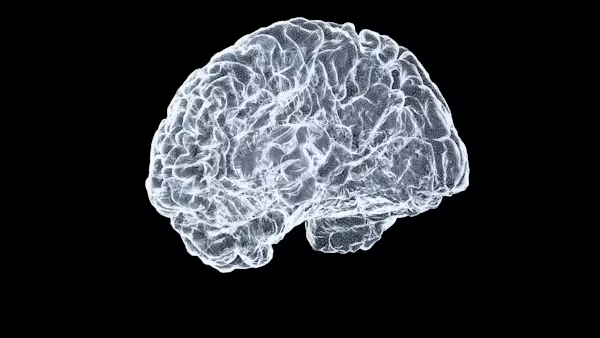
Neuro Surgery
Expert Care, Advanced Technology, Compassionate Service
Department of Neuro Surgery
What is Neuro Surgery?
Neurosurgery is the surgical specialty that focuses on the diagnosis and surgical treatment of disorders affecting the entire nervous system, including the brain, spinal cord, and peripheral nerves. A neurosurgeon is a highly specialized physician trained to perform complex and delicate operations on these structures. While neurology deals with the medical management of nervous system disorders, neurosurgery addresses conditions that may require surgical intervention. The field covers a wide range of issues, from congenital anomalies and traumatic injuries to tumors and degenerative diseases of the spine.
Common Conditions Managed
Neurosurgeons provide surgical treatment for a variety of conditions:
- ✓Brain Tumors: Surgical removal of both benign and malignant tumors of the brain.
- ✓Spine Disorders:
- ✓Degenerative Disc Disease: Including slipped discs (herniated discs) that compress nerves.
- ✓Spinal Stenosis: Narrowing of the spinal canal that puts pressure on the spinal cord and nerves.
- ✓Spinal Tumors and Infections.
- ✓Traumatic Injuries: Emergency surgery for head injuries (e.g., to remove blood clots) and spinal cord injuries.
- ✓Cerebrovascular Conditions: Surgical treatment for brain aneurysms and arteriovenous malformations (AVMs).
- ✓Hydrocephalus: A build-up of fluid in the brain, often treated by implanting a shunt.
- ✓Peripheral Nerve Disorders: Surgical repair for nerve injuries or to relieve nerve compression (e.g., carpal tunnel syndrome).
Diagnostic and Treatment Approaches
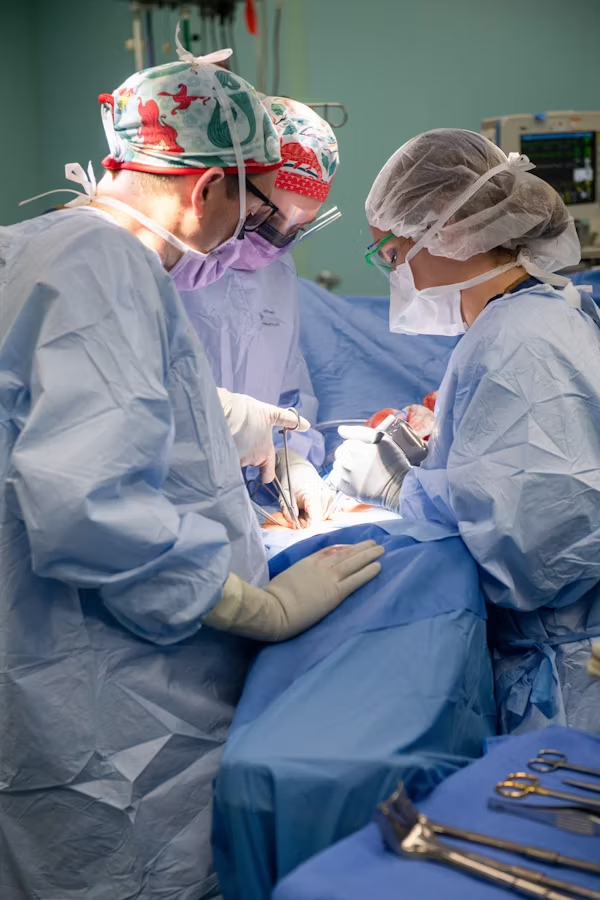
Diagnosis in neurosurgery is heavily reliant on high-quality neuroimaging, such as MRI and CT scans, which provide detailed pictures of the brain and spine. The primary treatment is the surgical procedure itself. Modern neurosurgery utilizes highly advanced technology to improve safety and precision. Microsurgery, performed using a powerful operating microscope, allows surgeons to operate on tiny structures with great accuracy. Neuronavigation acts like a GPS system for the brain, helping surgeons precisely locate tumors or other targets. For spine surgery, minimally invasive techniques are often used to reduce tissue damage and speed up recovery. Intraoperative neuromonitoring is used during surgery to continuously check the function of the nervous system, reducing the risk of injury.
Our Medical Experts
Meet our highly qualified healthcare professionals dedicated to providing exceptional medical care with expertise and compassion

Dr. P. Viggnesh
Neurologist
Consultant - Brain & Spine Surgeon
MBBS, MS, MCH, (NEURO SURGERY)

Dr. Narendhrakumar
Interventional Neuro Surgeon
Consultant Interventional Neuro Surgeon & Endoscopic Spine Surgeon
MBBS, MS, MRCS (UK), MCh (AIIMS Delhi), DrNB (Neuro Surgery), FINR (Delhi), FESS (South Korea)
Frequently Asked Questions
Common questions about Neuro Surgery at SSS Hospital Erode