Vascular Surgery
Expert Care, Advanced Technology, Compassionate Service
Department of Vascular Surgery
What is Vascular Surgery?
Vascular surgery is a surgical specialty that focuses on the diseases of the vascular system, which includes the body's arteries, veins, and lymphatic circulation. Vascular surgeons diagnose and manage all conditions affecting these vessels, except for those of the heart (managed by cardiologists) and brain (managed by neurosurgeons). They are trained in the full range of treatments, including medical therapy, minimally invasive endovascular procedures, and open surgical reconstruction. The primary goals are to treat diseases of the circulatory system, prevent major events like strokes and aneurysm ruptures, and save limbs threatened by poor circulation.
Common Conditions Managed
Vascular surgeons treat a variety of conditions that affect blood flow:
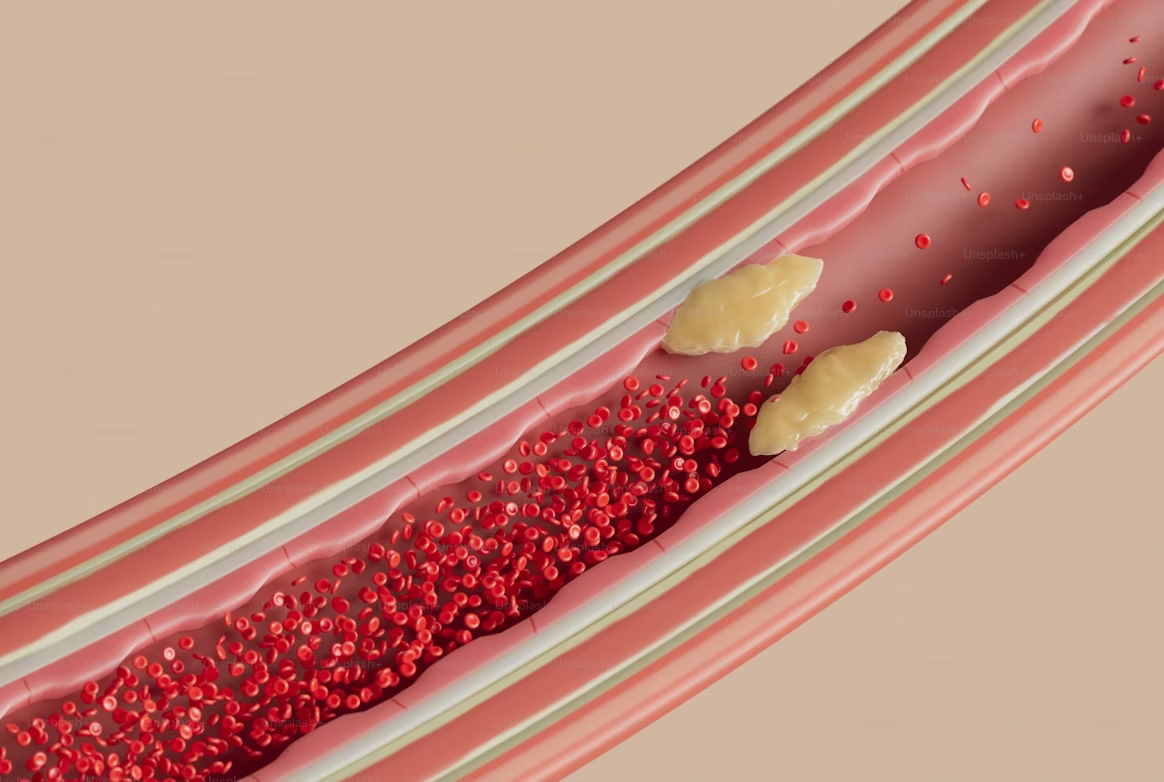
- ✓Peripheral Artery Disease (PAD): A circulatory problem in which narrowed arteries reduce blood flow to the limbs, most commonly the legs.
- ✓Aneurysms: A bulge or ballooning in the wall of a blood vessel, most commonly the aorta.
- ✓Carotid Artery Disease: Narrowing of the arteries in the neck that supply blood to the brain, which is a major risk factor for stroke.
- ✓Varicose Veins: Swollen, twisted veins that are visible just under the skin, usually in the legs.
- ✓Deep Vein Thrombosis (DVT): A blood clot that forms in a deep vein, usually in the leg.
- ✓Diabetic Foot: Foot ulcers and infections in diabetic patients, often related to poor circulation.
- ✓Vascular Access for Dialysis: Creating and maintaining access points (like AV fistulas) for patients who need hemodialysis.
Diagnostic and Treatment Approaches
Diagnosis of vascular disease relies heavily on non-invasive imaging. A Doppler ultrasound is a key tool used to visualize blood vessels and measure the speed and direction of blood flow. CT Angiography (CTA) and MR Angiography (MRA) provide detailed 3D images of the blood vessels. Treatment options are broad. Medical management involves medications to control blood pressure, cholesterol, and prevent blood clots. For blockages, modern treatment often involves endovascular procedures. These are minimally invasive techniques performed inside the blood vessels using catheters, such as angioplasty (inflating a balloon to open a vessel) and stenting (placing a small mesh tube to keep it open). For large aneurysms or extensive blockages, traditional open surgery to bypass or repair the vessel may be necessary.
Our Medical Experts
Meet our highly qualified healthcare professionals dedicated to providing exceptional medical care with expertise and compassion
Dr. Mohammed Minnathulla
Cardiothoracic & Vascular Surgeon
Consultant Cardiothoracic and Vascular Surgeon
MBBS, MS, MCh (CTVS)
Frequently Asked Questions
Common questions about Vascular Surgery at SSS Hospital Erode